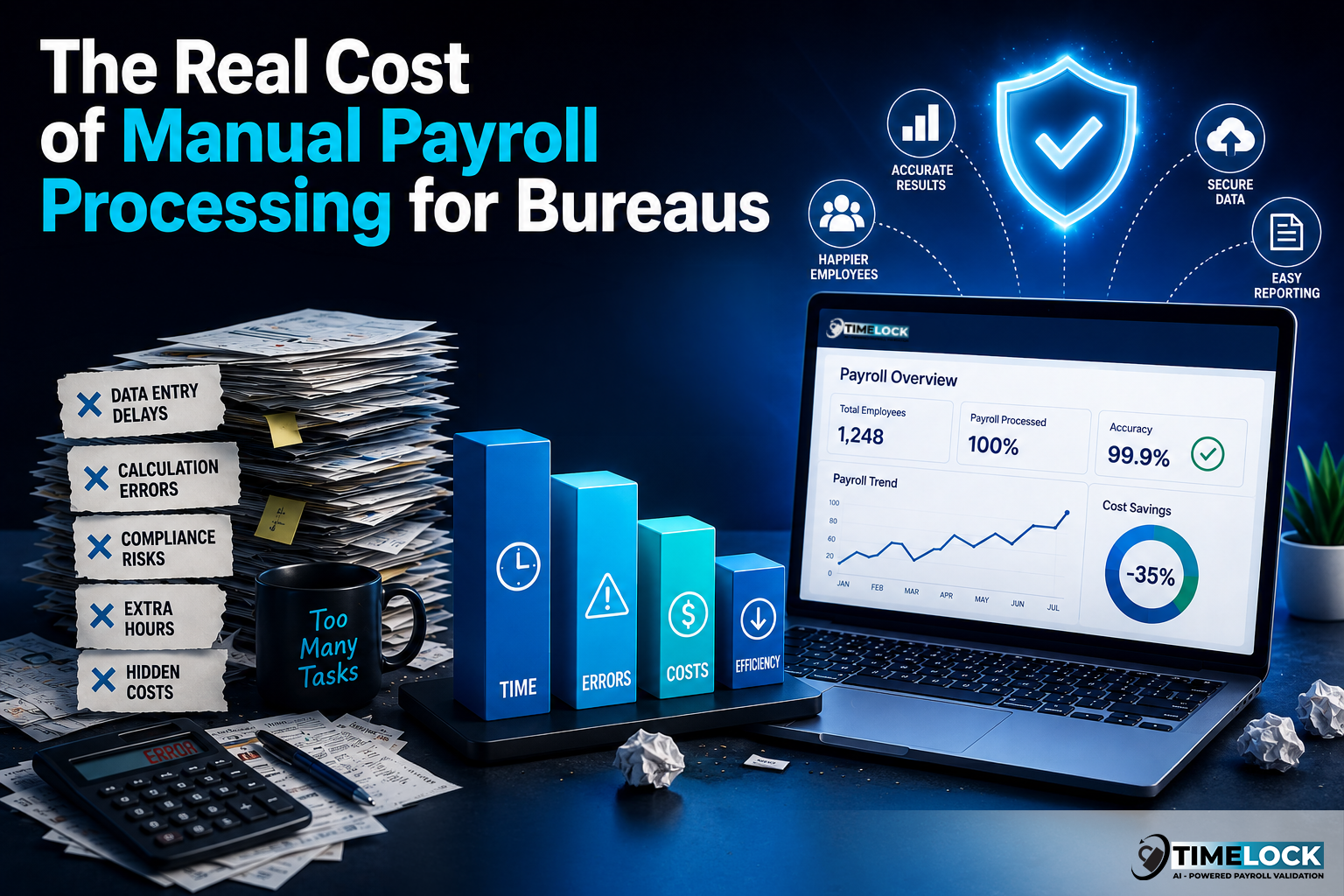
A while back, we were sitting with the CEO of one of our clients. Good-sized operation: 1,500 clients, full-service shop. Not just payroll payment processing. Benefits management, tax, and accounting. The kind of firm where payroll is the anchor but the relationship runs much deeper for a big chunk of their book.
We asked him why he didn’t just force his clients to enter payroll through the portal.
He didn’t hesitate. He said it was a deliberate choice. Letting clients submit however they wanted—email, spreadsheet, PDF, screenshot, or text in the body of an email—was a customer service differentiator. It retained clients who only used them for payroll. And for the clients leveraging the full suite of services, it was part of what made the relationship sticky. He wasn’t going to blow that up to make his operations team’s life easier.
We respected the answer. He was right. But then we asked him what it was actually costing him.
3,900 hours a year. That’s what his payroll specialists were spending manually keying in data from those submissions. 900 of his clients, sending payroll in whatever format they felt like, twice a month. And that number doesn’t include the mistakes. Miskeyed data. Wrong hours, wrong employee, transposed numbers. Some were caught before processing. Some are not caught until the following month. Some are not caught until after tax filings, which, if you’ve ever had to unwind a payroll error post-filing, you know exactly how expensive and painful that gets.
He knew all of this. He wasn’t surprised by any of it. He’d just accepted it as the cost of doing business the way he wanted to do business.
That conversation is a big part of why we built TimeLock.
This Isn’t One Firm’s Problem
After that conversation, we started asking the same question to other payroll processors. What percentage of your clients submit outside the portal? How do they submit? What does it cost you?
The answers varied in scale but not in pattern. Most processors had a significant portion of clients: often more than half, who weren’t using the portal consistently. Email was the most common alternative. Spreadsheets in every format imaginable. PDFs. The occasional fax. Some clients sent screenshots of handwritten notes. And virtually every processor had made the same quiet decision our client had: accept it, absorb it, and staff accordingly.
The reasons clients don’t use portals are pretty consistent too. Small business owners are context-switching constantly. Logging into a new system and entering data in a specific format is one more thing on a day that already has too many things. The construction company owner is pulling hours from two spreadsheets across two job sites; consolidating that into a portal format adds steps he didn’t have before. The bookkeeper managing payroll for five small clients has a workflow that already works for her. Your portal doesn’t fit into it.
None of them are being difficult. They’re doing what everyone does: optimizing for their own workflow.
Why Forcing the Issue Backfires
Some processors try to mandate portal use. Put it in the contract, train on it during onboarding, and follow up when clients revert. A few months later, the same clients are emailing again. You can require the behavior. You can’t make it easy enough to stick.
More importantly, the CEO had it right. Format flexibility is a real competitive advantage. When a prospect is choosing between two payroll processing companies and one says “send us what you have,” while the other says “you’ll need to log into the portal and enter everything,” the first one wins the experience conversation before price even comes up.
On the retention side, switching payroll processors is painful enough that most clients won’t do it over a minor frustration. But if a client already resents the submission process, you’ve lowered the bar. The portal requirement becomes a slow-burn grievance that surfaces the next time a competitor calls.
The Real Cost of Absorbing It
3,900 hours is a big number. But it’s not unusual at scale. Run the math on your own operation: take your client count, estimate what percentage submit outside the portal, multiply by 26 payroll cycles a year, and put a time estimate on what it takes your team to process each one manually. Most processors are sitting on a number that surprises them when they actually write it down.
And that’s just the labor cost. The error cost is harder to quantify but potentially larger. A miskeyed hourly rate or a wrong employee match doesn’t always surface immediately. When it surfaces after tax filings, the cost isn’t just the correction: it’s the client call, the amended filing, the credibility hit, and the time your most experienced people spend untangling something that should never have happened.
Most processors respond to volume by hiring. Another payroll administrator. Someone part-time during busy periods. It solves the immediate problem and locks in a cost structure that scales with client count, not with margin. Add clients, add headcount. The economics of growth get harder, not easier, as you get bigger.
There’s a Better Answer Than “Just Absorb It.”
The CEO had identified the real tension clearly: client flexibility is good for the business, but the operational cost of supporting it manually is unsustainable at scale. He wasn’t wrong about either side of that. He just didn’t have a third option yet.
The third option is removing the manual step entirely. Not changing how clients submit: they keep sending emails, spreadsheets, PDFs, whatever, but automating what happens on your end when those submissions arrive. Ingestion, validation, record matching, exception flagging, and direct push to your payroll platform. What used to take a specialist 15 to 60 minutes happens in roughly 90 seconds.
Your clients don’t change anything. Your team stops doing data entry and starts doing what they’re actually good at: reviewing exceptions, managing client relationships, and handling the complex situations that genuinely require human judgment. The competitive advantage of format flexibility stops being a cost center and becomes exactly what the CEO intended it to be: a differentiator that doesn’t cost you anything to deliver.
That conversation didn’t just inform what we built. It shaped how we think about the problem. He wasn’t wrong to prioritize client experience over operational convenience. He was just missing the piece that made those two things compatible.
TimeLock by EFX Financial Services is an AI-powered payroll submission automation engine that ingests submissions in any format—email, spreadsheet, PDF, fax, or text—and pushes records directly into your payroll platform in approximately 90 seconds. It integrates natively with APEX and iSolved, with additional payroll platform integrations in active development. If the numbers in this post sound familiar, let’s talk.


Leave a comment