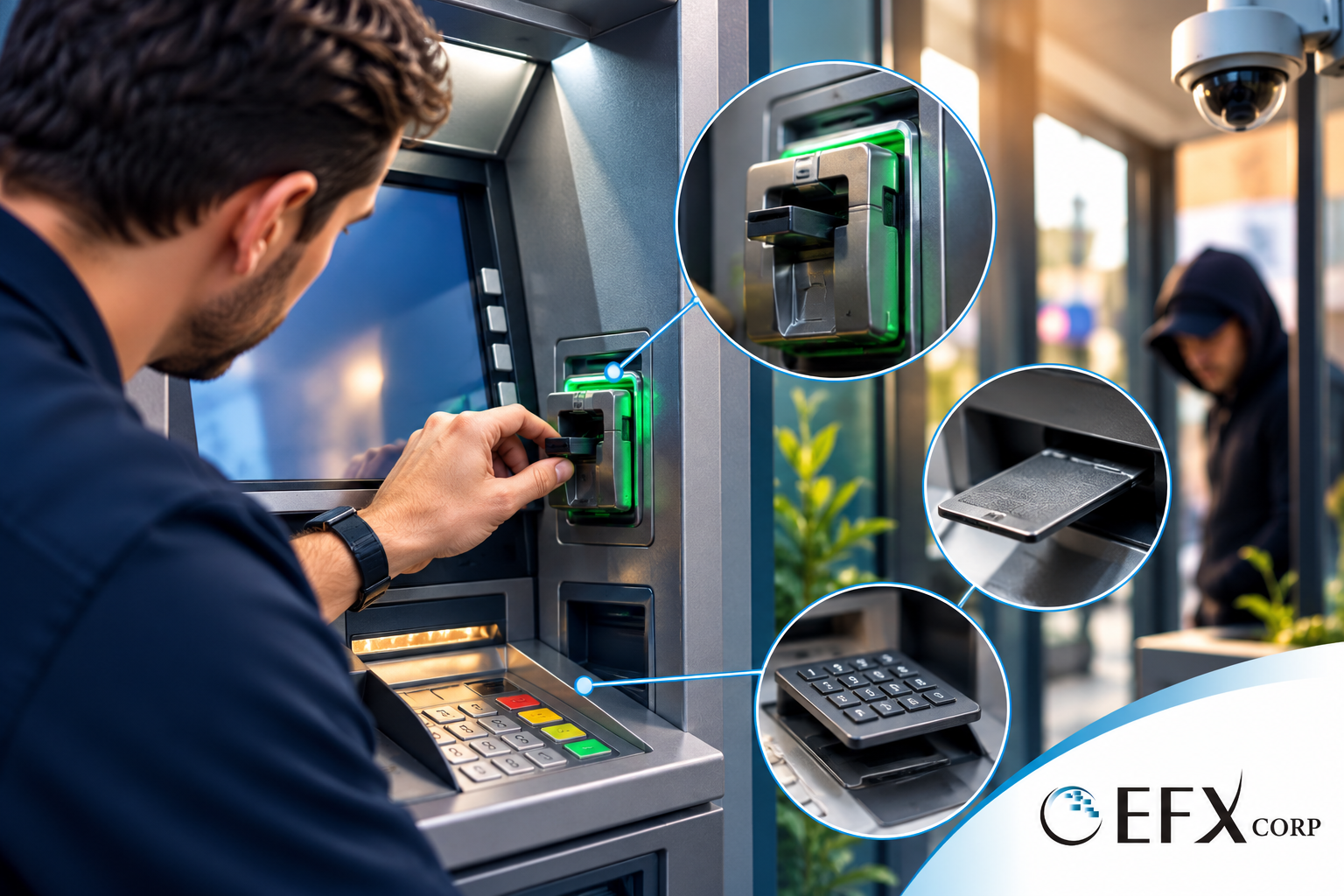
ATM skimming is one of the most common threats an ATM operator faces, and the devices keep getting harder to spot. Some are thinner than a credit card, sit completely inside the card slot, and can be installed within seconds. When cardholder data is stolen at your machine, the damage does not stop with the cardholder. Your merchant loses confidence, regulars stop using the location, and your terminal can be taken out of service while the incident is investigated.
The good news is that most ATM skimming attacks can be caught early or stopped outright with a simple inspection routine and a few smart hardware decisions. Here is what every ATM owner should know.
Know What You Are Looking For
Skimming setups have two jobs: capture the card data and capture the PIN. Most attacks use some combination of the following:
- Overlay skimmers fit over the real card reader bezel and read the magnetic stripe as the card passes through.
- Deep-insert skimmers are thin plates pushed inside the card slot, where they are nearly invisible from the outside.
- Shimmers sit inside the reader and intercept data from the chip. Criminals use that data to target cards and issuers that still allow magnetic stripe fallback.
- Internal skimmers are wired directly to the card reader inside the cabinet, usually by someone who accessed the top-hat with a common or stolen key.
- Keypad overlays and pinhole cameras capture PINs. Cameras are often hidden in light bars, brochure holders, or fake panels above the keypad.
Make Inspections Part of the Routine
The best detection tool you have is a person who checks the machine every day. A two-minute inspection at opening and closing catches most external devices. Train your merchant staff to:
- Pull on the card reader bezel. It should feel solid. Anything loose, raised, or wobbly is a red flag.
- Look for mismatches. Watch for colors, textures, or edges that do not line up, plus scratches, glue residue, or tape around the card slot.
- Press the keypad. A keypad that feels thick, spongy, or raised may have an overlay on top of it.
- Scan for anything new. Check for new brochure holders, mirrors, panels, or small holes near the keypad.
- Check the seals. Tamper-evident tape on the cabinet and bezel should be intact and match the serial numbers you recorded.
Keep a clear photo of each machine as it should look so staff have a reference to compare against. Log every inspection with a date and initials. That record becomes valuable if you need to narrow down when a device was installed.
Your ATM transaction data can also flag issues. A sudden spike in card read errors, a drop in completed transactions, or fraud reports tied back to your location are all worth a closer look.
Make Your Machine a Hard Target
Skimming crews look for easy machines. A few upgrades push them elsewhere:
- Replace factory locks. Many retail ATMs ship with common keys for the upper cabinet. Swap them for unique, high-security locks and keep tight control over who has access.
- Upgrade the card reader. Ask your manufacturer about anti-skimming readers, jitter technology, and tamper detection for your model.
- Keep EMV active and software current. Chip cards are far harder to clone, and current firmware closes known security gaps. If your model supports contactless, enabling it lets cardholders transact without inserting a card at all.
- Place it in plain sight. A well-lit spot within view of staff is a much harder target than a dark corner by the restrooms.
- Point cameras at the machine, not the keypad. You want footage of who approaches, not recordings of PINs.
- Encourage PIN shielding. A keypad privacy shield makes hidden cameras far less useful.
If You Find a Skimmer
How you respond in the first hour matters. Walk your staff through these steps before they ever need them:
- Take the machine out of service. Post an out-of-order sign so no one else uses it.
- Leave the device alone. Handling it can destroy fingerprints and other evidence. Never confront anyone who comes back to the machine.
- Call local law enforcement. They will collect the device and may bring in the U.S. Secret Service, which investigates card fraud.
- Notify your ATM processor immediately. Your processor can review recent transactions and help alert the card networks so affected cards can be flagged.
- Preserve your records. Pull camera footage and your inspection log covering the time since the last clean check.
- Check your other machines. Skimming crews often hit several locations in the same area.
- Inspect before reopening. Have a technician examine the machine, replace tamper seals, and change the locks if the cabinet was accessed.
Protect Your Machines and Your Reputation
ATM skimming is a numbers game for criminals. They target the machines that are easiest to compromise and least likely to be inspected. Daily inspections, upgraded locks and readers, smart placement, and a clear response plan put your ATM network at the bottom of their list.
At EFX Financial Services, we support independent ATM deployers and operators with real-time network visibility, ATM transaction monitoring, and a support team that knows what to do when something goes wrong. If you have questions about protecting your machines or your processing setup, contact us today.

Leave a comment